
The Democratic and Republican parties are relatively new in the history. When George Washington was elected the country’s first president, there were no parties. They began to evolve in the newly created federal government. First appeared the Democratic-Republican Party, which was replaced by the National Republican Party in 1824.
In 1826, Andrew Jackson founded the well-known Democratic Party. In 1833, the National Republican Party was replaced by the Whig Party. The Republicans appeared in 1854 based on the anti-slavery faction of the latter. In the 21st century, the Democratic Party that once supported slavery started to oppose racial discrimination. The Republicans revealed conservatism and struggled for the preservation of traditional norms. In Texas, parties arose after joining the Union (federation of northern states) in 1845. Read more about their fight for a political monopoly on houston-yes.com.
The beginning
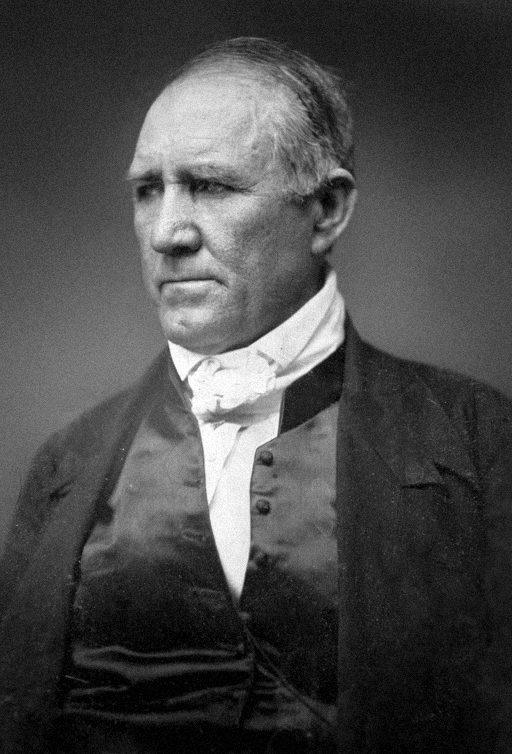
In 1836, Texas gained independence from Mexico and the Republic of Texas was formed. During its existence (1836–1845), political life was dominated by the president, Sam Houston. He was a hero of the war for the independence of Texas from Mexico. There were no political parties then, but pro-Houston and anti-Houston factions existed.
Many of the early settlers who came from the South brought with them political allegiance to the Democratic Party. In six years, it grew from an association of doctors, lawyers and other professionals into an organized force without any legitimate opposition. Democrats were pro-slavery, while members of the opposition Whig Party supported a variety of issues, such as moral reform, combating cruelty in relation to the indigenous people and the abolition of slavery.
In 1845, the Republic of Texas received statehood. In the 1850s, the state Democratic Party was merged into the national party and factionalism ceased. During the Reconstruction era (1863–1877), the Republican Party emerged. It was primarily supported by African Americans who opposed slavery.
One-party control
In 1877, Texas became a one-party state. The Republicans lost their political power and the Democrats gained a monopoly. Such one-party control was maintained until the late 1960s.
State voters usually chose between several candidates for each office but all of them were Democrats. Although African Americans were given the right to participate more actively in politics, they were often unable to freely exercise these rights due to a number of obstacles, such as violence from the Ku Klux Klan. During this period candidates of all ideologies – liberals, conservatives, members of the Ku Klux Klan and others – ran equally as Democrats.
Traditional party functions, including conducting pre-election campaigns, recruitment of specialists and financing, were performed not by the party itself but by unofficial organizations, election committees and other informal groups. Voters knew little about these groups and their plans. Therefore, they elected only Democrats as governor, vice governor, attorney general, controller, etc.
Such fragmentation of power created a favorable environment for politicians to pursue their own interests. Therefore, we can assume that there was not one-party politics in Texas but a non-party one.
In the 1920s, Democrats tackled issues of child labor, workers’ compensation, women’s suffrage, regulation of monopolies and railroads, standards of safe food, medicine and housing and more. In the late 1920s, Democrats began to shift their political emphasis to business, economic growth, state support for educational and penitentiary reform and the construction of highways and industrial facilities.
The restoration of bipartisanship
The transition to two-party politics was slow and intermittent. Starting from 1928 Texas periodically voted for Republican presidential candidates in the midst of bitter animosity between factions of the Democratic Party over the legitimacy of the Ku Klux Klan.
From the mid-1930s to the early 1950s, it experienced significant upheaval as a result of ongoing disputes between its conservative and liberal factions. Thus, they could not agree on the regulation of oil and gas, the economic consequences of the Great Depression, the voting rights of African Americans, etc. However, even in spite of some differences, they were truly loyal to the party.
In the 1950s, surprisingly enough, the Democratic Party suffered a political collapse. It was divided into three main factions, namely conservatives, moderates and liberals. Then the Republicans were finally able to get into power.
In 1961, Republican John Tower won a special election for the US Senate, marking the collapse of the Democratic monopoly at the state level. From that time until 1978, the Republicans gradually won local elections in Dallas and Houston. However, conservative Democrats continued to dominate state politics until the 1970s.
In 1978, for the first time in 104 years, the state elected a Republican governor William P. Clements. He did not win re-election in 1982, but he still signaled the Republicans’ intention to become a major player in politics. The revival of the party was largely due to many moderate and conservative Democrats supporting conservative Republicans.
A new one-party regime
The re-election of Republican President Ronald Reagan in 1984 finally confirmed the position of the corresponding party. During the 1986 state election, most old-school conservative Democrats either left the party or resigned. Those who remained were liberals. Republican William P. Clements was re-elected governor in 1990 and his party won all three branches of state as well as the federal government.
The 1994 election was a turning point for the Republicans as they defeated Democratic Governor Ann Richards and nearly matched up by the number of state senators. In 1994, Republican George Bush became the governor of Texas. Two years later, Republicans won a majority in the Texas Senate for the first time since the Reconstruction. In 1998, they won statewide elections.
In 2003, Republicans won a majority in the Texas House of Representatives for the first time in 130 years. Until 2006, Texas was formally considered a two-party state. However, every elected official, including 18 members of the two highest courts, were Republican, as well as US senators.
If until the 1980s the majority of Texans voted for candidates from the Democratic Party, in the 21st century they had changed their affiliation. Since then, Republicans have usually won statewide, even when they lost local elections. That is the story of how Texas, once a solidly Democratic state, has become fully Republican.