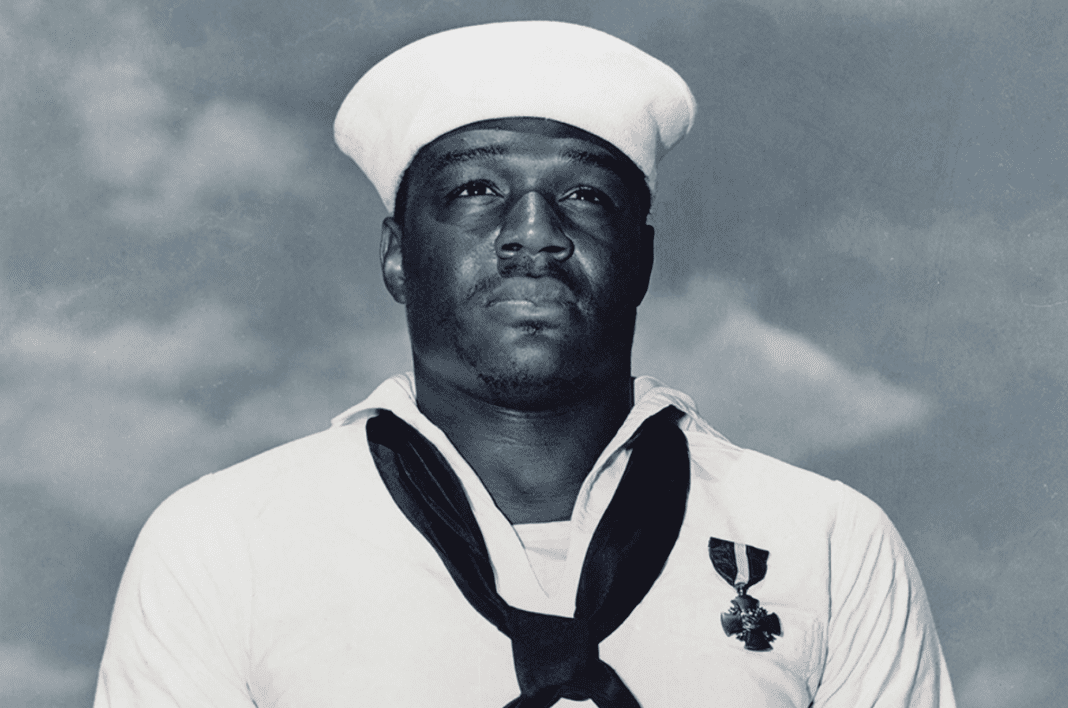

The greatest calling in life is to be truly human, no matter your profession. Doris Miller embodied that belief. Though he was just a cook, he managed to shoot down at least one enemy plane and save several shipmates from certain death. Despite his short life, Miller’s courage made him a hero whose name would live on. Here’s the story of this ordinary yet extraordinary man. More on houston-yes.com.
From the Kitchen to the Gridiron—and a Life’s Calling
Doris Miller was born on October 12, 1919, in Waco, Texas, to Connery and Henrietta Miller, a family of modest farmers. He was their third son, and later another boy joined the family. As a kid, Doris was like most boys—he loved playing football, goofing around, and helping his parents on the farm. He attended A.J. Moore High School in Waco, where he was an average student but an outstanding football player. His performance earned him a spot as a defensive back on the school team—a role he filled brilliantly.
He might have become a famous football player in Texas—or even nationwide—but the Great Depression changed everything. To help his family survive, Doris had to leave school and his beloved sport. His father found him a job at a small restaurant in Waco, a twist of fate that would shape his future. Though he started as a kitchen helper, he quickly discovered that he loved the work.
What began as a temporary job turned into his calling. Doris showed up each morning with enthusiasm, and coworkers remembered him as someone who tackled even the dirtiest kitchen chores with a smile. His earnings helped his large family weather the worst years of the Depression.
Becoming “Dorie” the Sailor
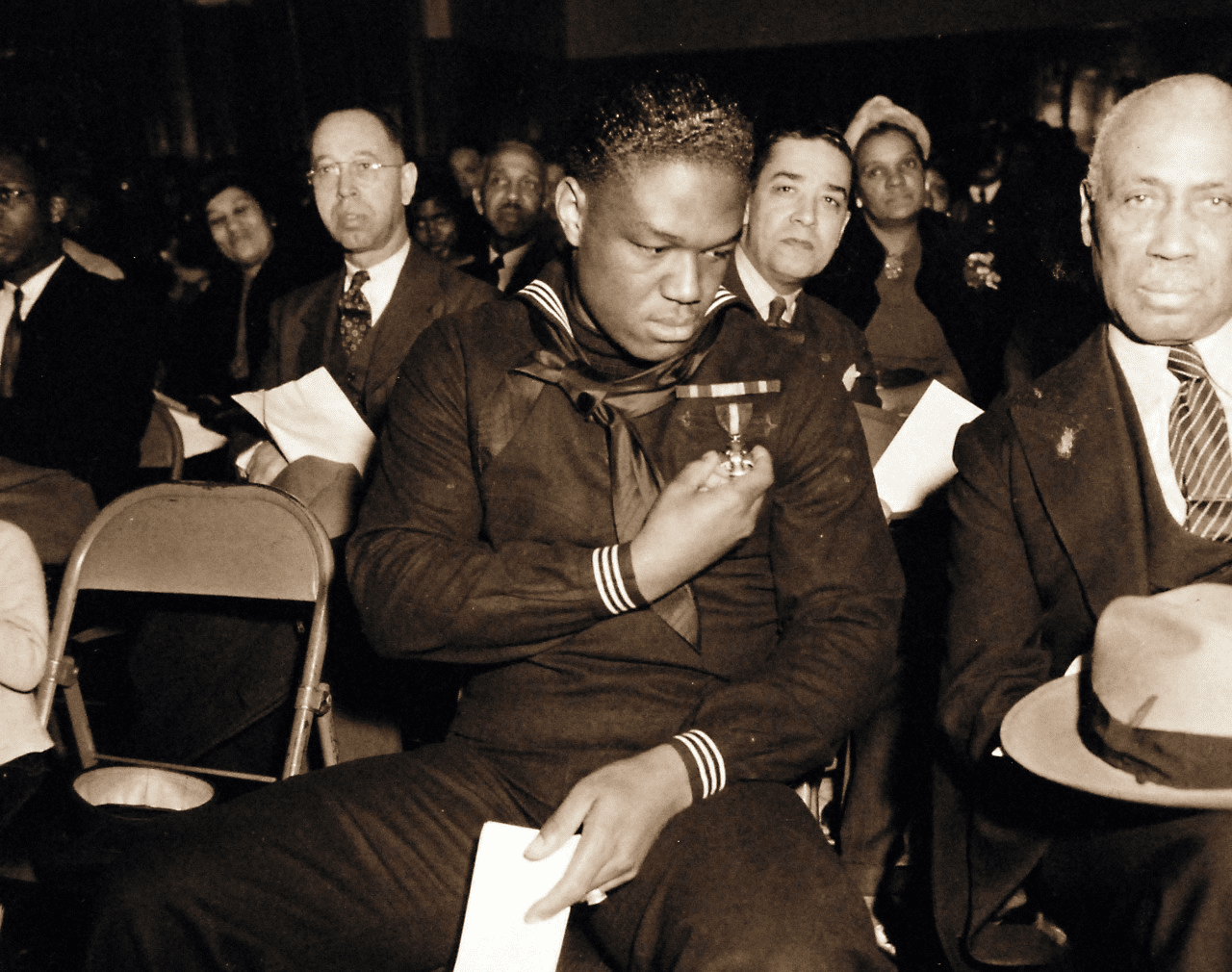
Just weeks before his 20th birthday, Doris Miller enlisted in the U.S. Navy in early autumn 1939. By that time, Hitler had already invaded Poland and was rapidly advancing across Europe. Anticipating America’s eventual involvement in the conflict, the U.S. military began recruiting volunteers. Like many young men, Doris dreamed of adventure and saw military service as an opportunity for something greater.
He traveled to Dallas to enlist and chose the Navy—it seemed the most exciting branch of service. But his love for cooking never faded. After completing training in Norfolk, Virginia, he was assigned as a mess attendant aboard the battleship USS West Virginia. There began the not-so-romantic daily life of “Dorie” Miller, the ship’s cook.
Between Water and Fire: The Luck of Pearl Harbor
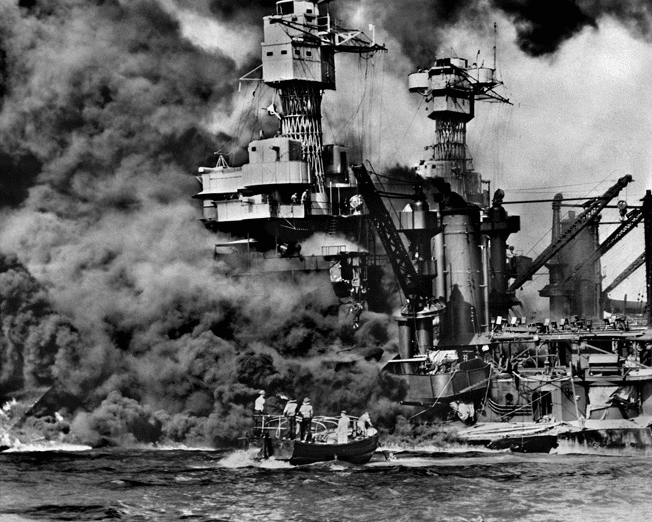
December 7, 1941 — a date forever marked in American history. It was a quiet Sunday morning, and most sailors were resting. Miller, who had been promoted to Mess Attendant Second Class, was doing laundry when Japanese bombers struck Pearl Harbor. The USS West Virginia, anchored near the naval base, was one of the first ships hit. Although Miller escaped injury, many of his shipmates did not. Some were killed instantly; others were gravely wounded, including the ship’s captain, Mervyn Bennion.
Miller immediately jumped into action, carrying wounded men to safety and personally rescuing Captain Bennion. Then, in a stunning act of bravery, he returned to the deck and manned an anti-aircraft gun—a weapon he had never been trained to use. At the time, segregation in the U.S. military prevented Black sailors from serving in combat roles or weapons crews. But under fire, Miller figured out how to operate the gun and opened fire on incoming planes.
News reports later claimed he shot down as many as five enemy aircraft, though official records confirmed one. Miller himself modestly said he was sure about one plane but couldn’t vouch for the others. The West Virginia sustained two bomb hits and seven torpedo strikes before it began sinking, forcing Miller and the surviving crew to abandon ship.
Out of 1,106 crew members, 106 were killed, including Captain Bennion, who died of his injuries. The ship settled on the shallow harbor floor but was later refloated and repaired. By 1944, it was back in service, participating in key battles at Leyte, Iwo Jima, and Okinawa.
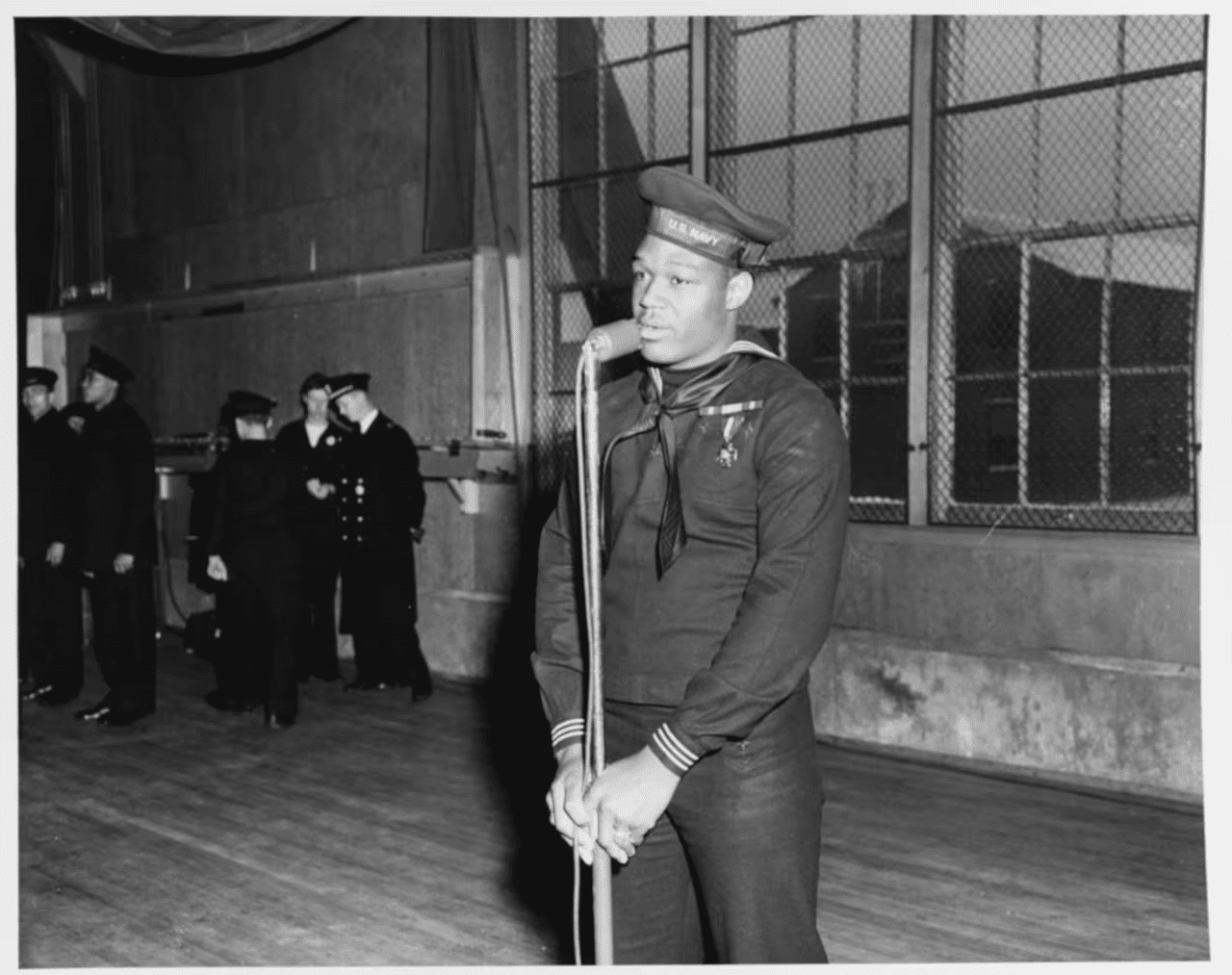
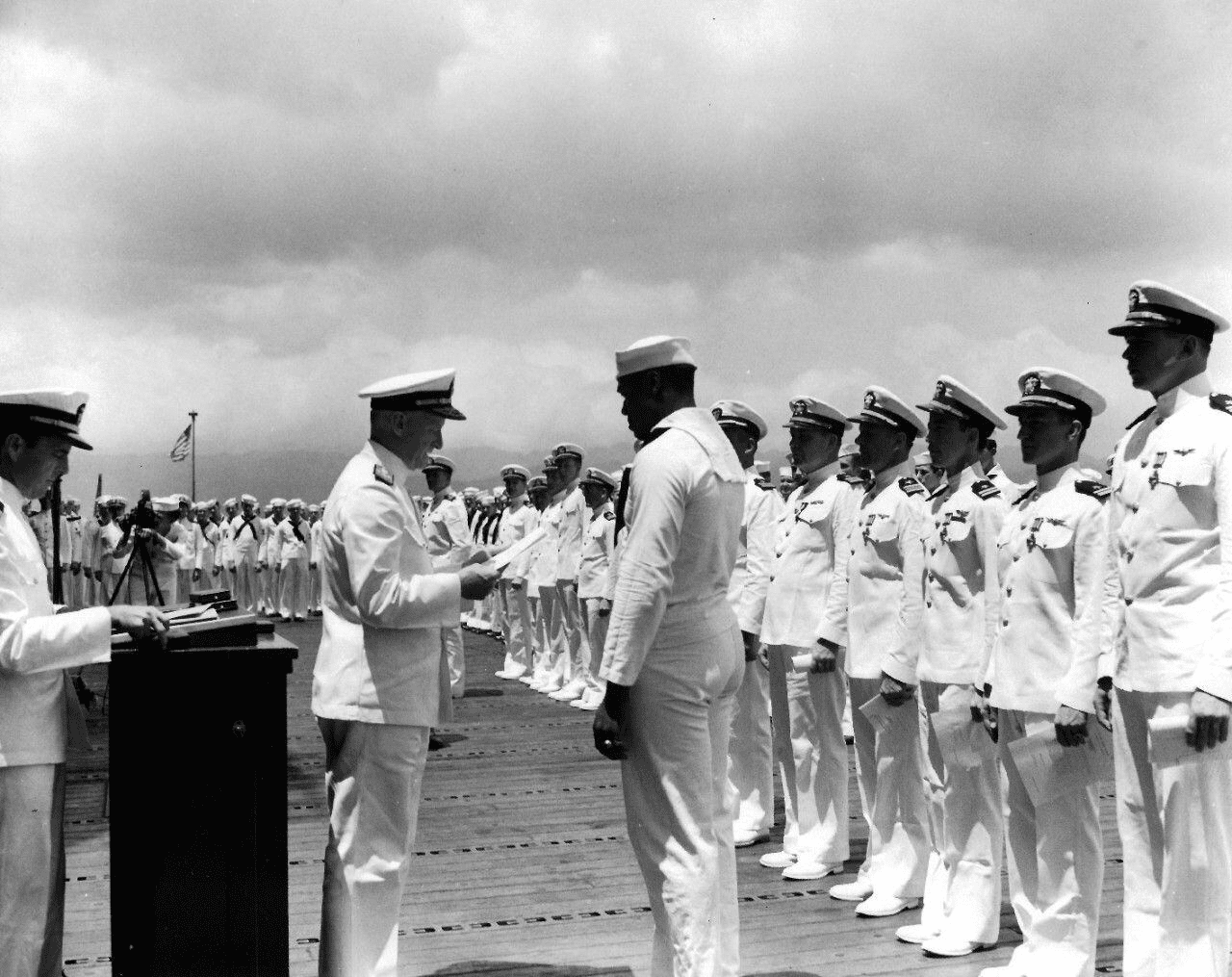
For his extraordinary courage, Doris Miller was awarded the Navy Cross—the first African American ever to receive this honor. The ceremony took place on May 27, 1942, at Pearl Harbor. Fleet Admiral Chester Nimitz personally presented him with the medal, calling Miller’s heroism an inspiration to the entire Navy.
When Luck Runs Out
After the ceremony, Dorie was given a short leave and returned home to Waco, where his family welcomed him as a hero. Sadly, it would be their last reunion. After his leave, Miller returned to duty and was assigned to the escort carrier USS Liscome Bay, as the West Virginia was still under repair.
Despite his status as the Navy Cross recipient, Miller continued to serve as a cook. By then, the U.S. had entered World War II as a full combatant, and his ship operated in the Pacific. On November 24, 1943, during the Battle of the Gilbert Islands, the Liscome Bay was supporting U.S. Marines landing on Tarawa when it was struck by a Japanese torpedo. The hit detonated ammunition storage, causing a massive explosion. The ship sank in just 23 minutes, killing 644 of its 916 crew members—including Doris Miller.
Honoring Dorie’s Memory
Doris Miller’s heroism was never forgotten. His story became a rallying symbol of patriotism and equality, inspiring African Americans to enlist during the war. The Navy named a dining hall, a barracks, and even a destroyer in his honor. The USS Miller became the third Navy ship ever named for an African American. Construction of a new aircraft carrier, the USS Doris Miller, is scheduled for 2026.
In his hometown of Waco, a park and cemetery bear his name. In 2019, the city unveiled a statue commemorating the local hero. Schools in Houston and Philadelphia are named after him, as is a chapter of the Veterans of Foreign Wars in Los Angeles. In Chicago, the Doris Miller Foundation continues to honor those who advance racial understanding and social justice—carrying forward the spirit of a man who proved that courage knows no color.