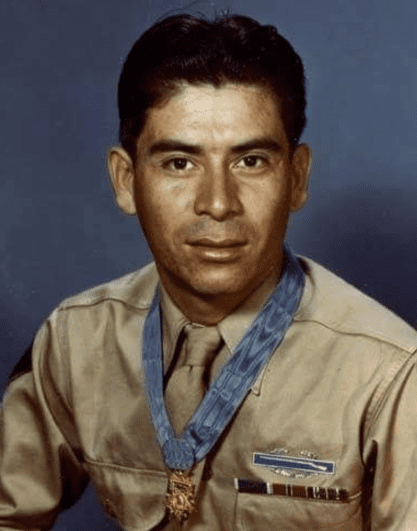

On November 27, 1944, commander Marcario García and his military unit were attacked by mortar and machine-gun fire in the German Hürtgen Forest. As a result of the ongoing wave of Nazi attacks, numerous American soldiers were killed or injured. Garcia himself was hit in the shoulder but continued to fight hard on his own. He was the first Mexican immigrant in the United States to be awarded the Medal of Honor, the country’s highest military award given to U.S. military soldiers for their personal bravery during combat operations.
Even such exceptional bravery, however, could not guarantee his safety in the state for which the hero risked his life. Lack of American citizenship frequently resulted in ethnic discrimination. That is why the Houston man initiated a Hispanic civil rights movement. Learn more about his life path at houston-yes.com.
Rough childhood
Marcario García was born on January 20, 1920, in the Mexican state of Coahuila, which borders Texas. The boy moved to Texas with his family when he was three years old, and two years later he began working on a cotton plantation in the Houston suburb of Sugar Land. This was one of many places in the country where signs warning about “Mexicans” and “Negroes” were regularly put on the windows, thus the boy had already experienced oppression and humiliation as a child because of his ethnicity. Work became a barrier to obtaining an education, thus Marcario only completed elementary school.
Military service
After the Japanese attack on the American naval and air base Pearl Harbor in December 1941, García felt bound to fight for the country that became his home, although it did not receive him very kindly.
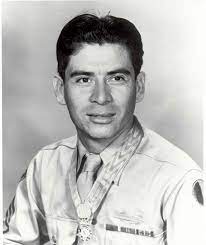
He enlisted in the United States Army infantry at the age of 22. During World War II, after receiving his marksman qualification, the newly minted soldier entered the battlefield in Europe. During the Battle of Normandy in June 1944, the soldier suffered an injury during the landing. After a four-month recovery period, with renewed vigor, he rejoined his unit as it was advancing toward Germany.
Legendary battle
On November 27, 1944, the soldier displayed heroism while completing his duties as a detachment commander, when his unit was sent to battle with two German machine-gun positions. Although García handled the first one by himself, he received multiple injuries. He returned to his unit, where he was expected to receive medical aid, but the second enemy position opened fire at this point. Despite his own safety, García launched an attack, killing three Germans and capturing four more.
He fought until the mission was accomplished and then he agreed to be evacuated for medical treatment. Courageous behavior and total ignorance of personal safety resulted in the destruction of two enemy positions, allowing American troops to advance.
For his extraordinary bravery in the face of fire, García was promoted to staff sergeant and returned to America in February 1945. The hero was awarded the Medal of Honor for his bravery during combat operations. The Medal of Honor is the highest US military award given by the federal government to military personnel of the US Armed Forces for their personal bravery during combat operations. García became the first Mexican immigrant to be awarded the Medal of Honor.
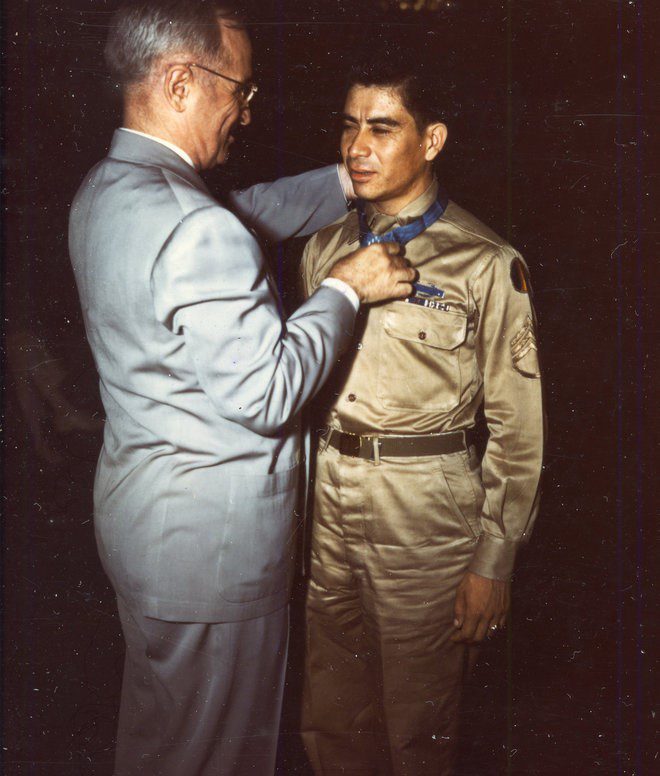
In addition, he received the Purple Heart, a US military award granted on behalf of the president to all American servicemen who died or suffered injuries as a result of enemy action. The third medal that Marcario received was the Bronze Star, the fourth most important award in the US Armed Forces. He was also awarded the Mérito Militar, Mexico’s highest military honor.
Victim of discrimination
García fought for America and bled for it, although there were two sides to America at the time. One attempted to live up to the principle that all humans are created equal, whereas the other believed that, to paraphrase George Orwell, “some people are more equal than others.”
Shortly after receiving the Medal of Honor, due to his ethnicity, García was refused service at a restaurant in Richmond, Texas. This sparked a fight in which the restaurant owner beat the military officer with a baseball bat. The assailant even sued the war hero, but the charges were dropped when the national media revealed the truth about the racist attack.
Newspaper and radio commentator Walter Winchell made sure that this story became national news. The incident was eventually forgotten, but the Texan’s military achievements prompted García’s biographers to spend 17 years researching and writing down the details of the conflict.
At the same time, patriotic Americans and devout Christians expressed their displeasure with what they called the “immigration disaster.” Many Americans wished to deport immigrants. However, what if García had been deported? How many Americans would have died in the Hürtgen Forest?
Civil rights activist
Following his service, García was granted U.S. citizenship on June 25, 1947. He then obtained his high school diploma in 1951, after which he got a position as a counselor in the Veterans’ Administration, where he served for 25 years. In 1952, the veteran married Alicia Reyes, and the couple had three children.
For many in the Latin American community, García is a symbolic figure associated with the emergence of what, after World War II, was known as the Mexican American Civil Rights Movement. Houston became the epicenter of the activist movement. By the way, the League of United Latin American Citizens, the nation’s oldest Hispanic civil rights organization, was founded in Texas.
Throughout his life, García remained a civil rights leader for his community. In November 1963, he joined a group of Latin American veterans and civil rights activists at a gala concert in Houston. Then, US President John F. Kennedy visited the city where García met him. The president discussed the foreign policy of the United States and Latin America, as well as the significance of recognizing Spanish-speaking organizations. The following day, the head of state was assassinated.
Death and recognition
The Texas hero died on December 24, 1972, from injuries previously sustained in a car accident. García was laid to rest at the Houston National Cemetery with full military honors.
To honor the warrior’s memory, Houston authorities named a high school and a street after him. In 1983, then-Vice President George W. Bush inaugurated the newly established Marcario García Army Reserve Center in Houston. In 1994, a high school in the Fort Bend Independent School District was also named after Marcario.
In November 2021, a mural of García was presented on the outer wall of Houston Fire Station 20. The painting was dedicated to Veterans Day since veteran García has a unique value not only for Houston’s Latin American community but also for all veterans in general.
The mural was the first of its kind to be included in Houston’s permanent art collection. The artists worked on this project for more than two years. They wanted to do the best they could to honor the local Mexican-American hero in an area where there are so many people like him, particularly due to their Spanish language and Mexican origin.