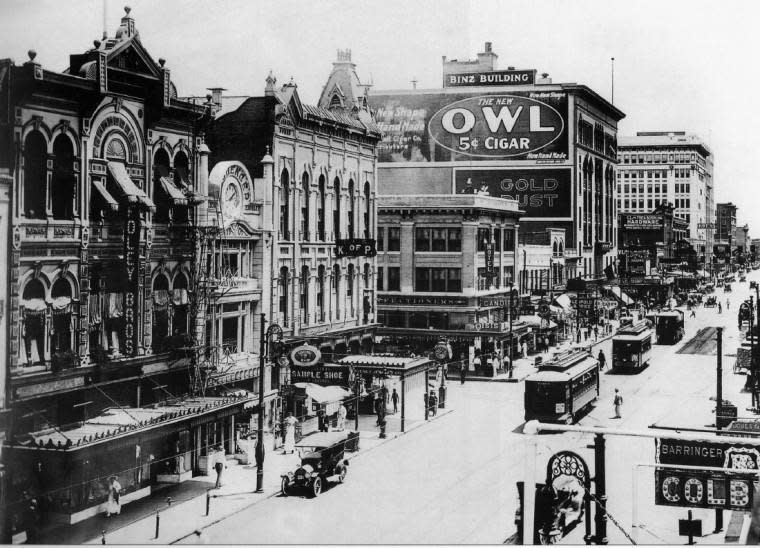

Houston is one of the largest cities in the United States, renowned for its economic strength and cultural development. While the city’s history is full of milestones, the most important of all is its founding. Today, we take a closer look at this historic event. You can read more on houston-yes.com.
How It Happened
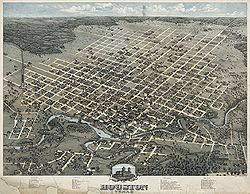
Every Houston resident knows that August 30, 1836, marks a turning point in the city’s history. On that day, brothers Augustus and John Allen purchased roughly 6,600 acres (about 27 square kilometers) of land along Buffalo Bayou. Their vision was to establish a commercial hub and make it the capital of the newly independent Republic of Texas. The brothers named the new settlement after General Sam Houston, commander of the Texian Army during the fight against Mexico and the first president of the Republic of Texas.
By 1837, Houston’s population had reached about 1,500. The city did serve briefly as the capital of the Republic, though by 1839 the government had relocated to Austin.
In 1840, Houston established its Chamber of Commerce, which played a vital role in boosting local business and improving infrastructure, especially maritime trade.
By the second half of the 19th century, Houston had become a key transportation hub thanks to the construction of railroads and shipping channels. But the city’s true economic transformation came in 1901, when major oil reserves were discovered nearby. This discovery accelerated Houston’s growth into a leading industrial and commercial center.
The population rose steadily — from about 9,000 in 1870 to placing the city among the top 100 largest in the U.S. by the 20th century.
Who Was Sam Houston?
Sam Houston is remembered as a prominent American statesman and political leader. He served as both the first and third president of the Republic of Texas, and remains the only person in U.S. history to have been governor of two states — Tennessee and Texas.
Born in Rockbridge County, Virginia, into a Scottish-descended planter family, Houston had an unusual upbringing. As a boy, he lived among the Cherokee people, gaining deep knowledge of their culture and language. He later fought in the War of 1812 and the Creek War, where he suffered severe wounds.
In 1836, Houston commanded Texian forces to victory at the Battle of San Jacinto, securing Texas’s independence from Mexico. His legacy is tied to the annexation of Texas into the United States and his lifelong advocacy for national unity and peace.
Houston Today
In the 21st century, Houston is the fourth-largest city in the United States and the largest metropolis in Texas, with a thriving economy, diverse industries, and rapid population growth. As of 2025, the city is home to more than 2.4 million people.
Houston’s economy is not only fueled by oil. It has become a powerhouse in medical research, education, technology, and innovation.
When the Allens first founded Houston, only 12 settlers lived there. Today, it stands as a world-class metropolis, home to booming sectors such as IT, logistics, and finance. And it all began with two brothers willing to invest $5,000 in land along the bayou.
This has been a fascinating journey into Houston’s origins. We hope you enjoyed learning more about the history of our city.