
The Battle of Galveston took place on January 1, 1863, right in the middle of the American Civil War. It held strategic importance for the entire Texas coastline and for Houston in particular. Houston served as a key Confederate supply hub. Learn more about this bloody battle at houston-yes.com.
The Civil War and the Prelude to Battle
To understand the battle’s essence, we need to take a few steps back. The Civil War began in 1861, dividing the nation into North and South over the issue of slavery. The Northern states were industrial regions with developed manufacturing and remained loyal to the U.S. federal government. They fought to abolish slavery and preserve the Union. The Southern states, on the other hand, refused to give up their slaveholding system. Confident in their economic independence—Southern cotton was highly sought after across Europe—eleven states decided to secede from the Union. From there, events escalated rapidly.
The four-year conflict began with the confrontation over Fort Sumter, a garrison fort in South Carolina. On April 12, 1861, the Confederates, claiming ownership, issued an ultimatum demanding the Union troops surrender the fort. When the defenders refused, the Confederates opened fire. The bombardment lasted 34 hours and became a symbol of the nation’s split, marking the start of the Civil War. Thousands died on both sides, and the war’s outcome would forever reshape American society.
The Island Port of Galveston
At the outbreak of the Civil War, Galveston was one of Texas’s most prosperous and vital commercial hubs. Its access to the Gulf of Mexico made it an essential port for trade with Europe. About three-quarters of all cotton exports passed through Galveston—a lucrative commodity known as “white gold.” The cotton trade ensured steady work and a comfortable lifestyle for the city’s residents.
The city authorities worked to make Galveston a modern, comfortable place to live. With significant revenue from port trade, they invested in urban infrastructure—paved streets, gas lighting in homes, and even a railway bridge connecting the island to the mainland. At that time, Galveston was the largest city in Texas, with a population of around 7,200.
When the first talks about secession began in February 1861, Galveston residents overwhelmingly voted in favor. Rumors had spread that President Lincoln planned to abolish slavery in Texas, so support for the Confederacy was strong. The decision was quickly ratified, and by March, Texas had officially seceded and joined the Confederate States of America.
The Escalation of Conflict
President Abraham Lincoln’s Union government couldn’t ignore the Confederacy’s defiant stance. In the fall of 1862, Lincoln ordered the blockade of all major Texas Gulf ports. It was a smart move—cutting off Confederate exports and supplies would weaken their war effort. By blocking major Southern ports, the Union sought to choke the Confederacy’s finances and disrupt its weapon supply lines. Galveston, being a major port, was one of the first targets.
In July 1861, the USS South Carolina, converted into a warship, entered Galveston Bay under the command of Captain James Alden to block trade routes. However, a single ship couldn’t enforce an effective blockade. Cotton trade continued, with shipments first going to Havana and other nearby ports, where the profits were used to purchase weapons and supplies for the Confederate army.
This “blockade” dragged on for a year without much success. The Union eventually issued an ultimatum: surrender the city or face an attack. Confederate General Paul O. Hébert, realizing the city couldn’t withstand a siege, ordered the evacuation of civilians, livestock, and provisions. However, the Union’s threat turned out to be a bluff—Captain Henry Eagle of the USS Santee didn’t have enough healthy troops; many were suffering from scurvy. The stalemate continued.
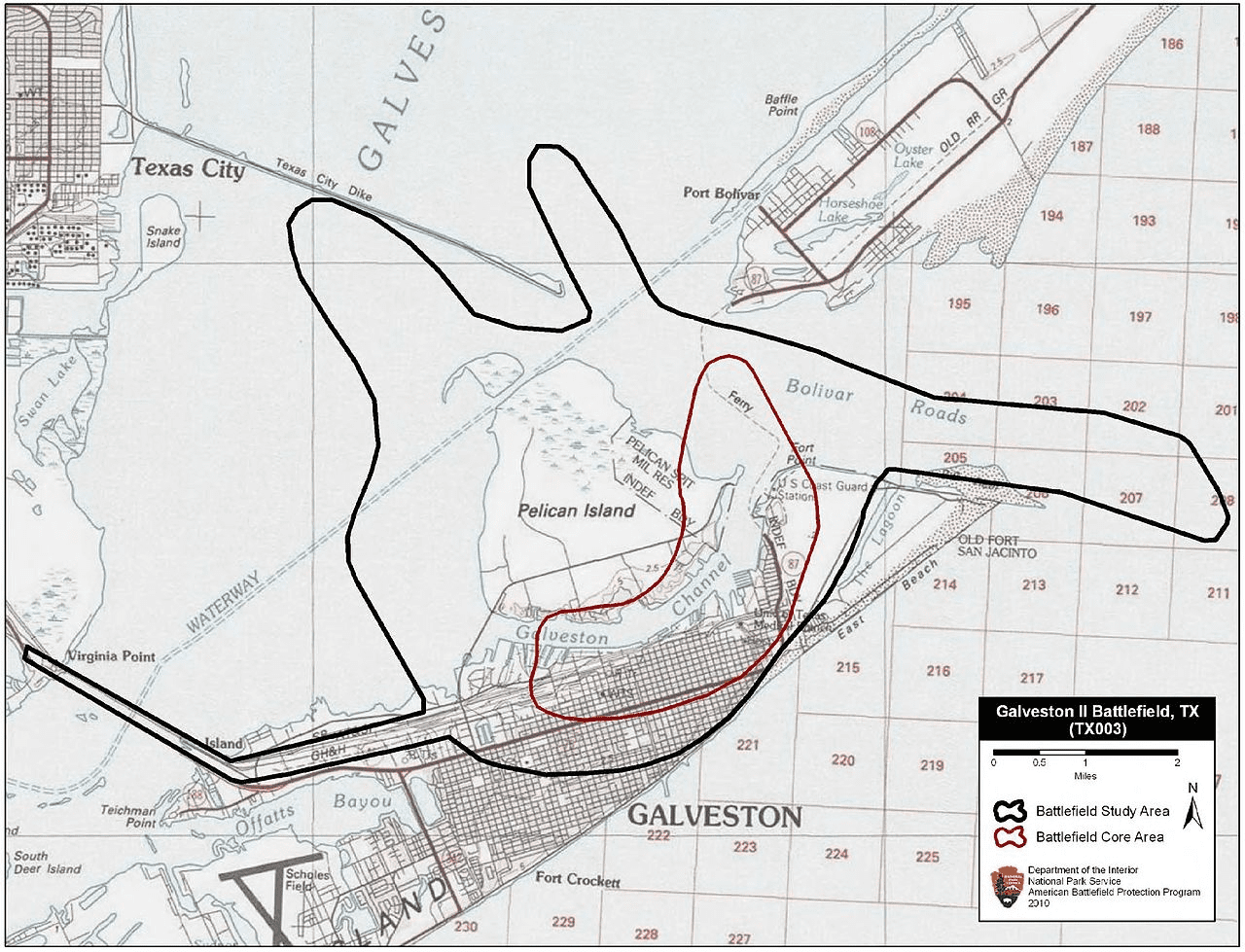
On October 4, 1862, a fleet of eight Union ships arrived to reinforce the blockade. They demanded the city’s immediate surrender. The Confederates, unprepared for such a show of strength, withdrew to the mainland to regroup. By December, Union troops occupied the Galveston docks and took control of the city.
A Battle Won, But a War Lost
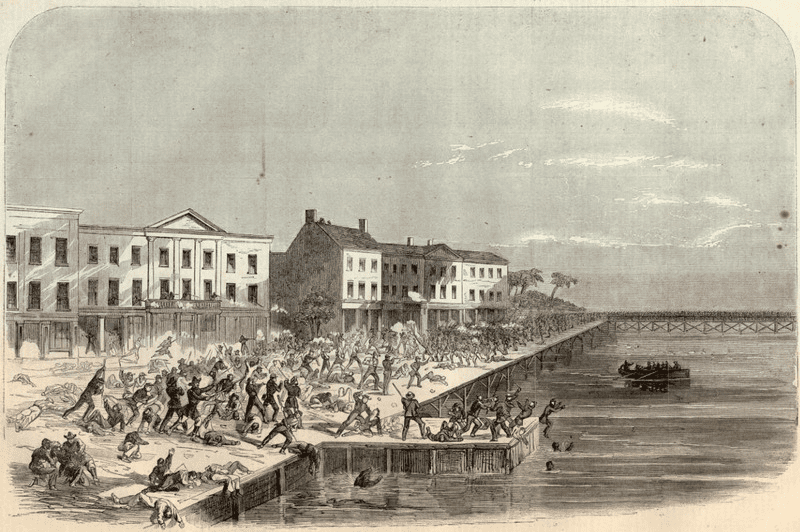
The Confederacy had suffered defeat, but they weren’t ready to surrender. A new plan was devised—one that relied on surprise rather than strength. At dawn on New Year’s Day, 1863, Confederate General John B. Magruder launched an assault on Union positions at the Galveston wharf. Union defenses were strong, and artillery fire forced the attackers to retreat. But that was exactly what Magruder intended—it was a diversion.
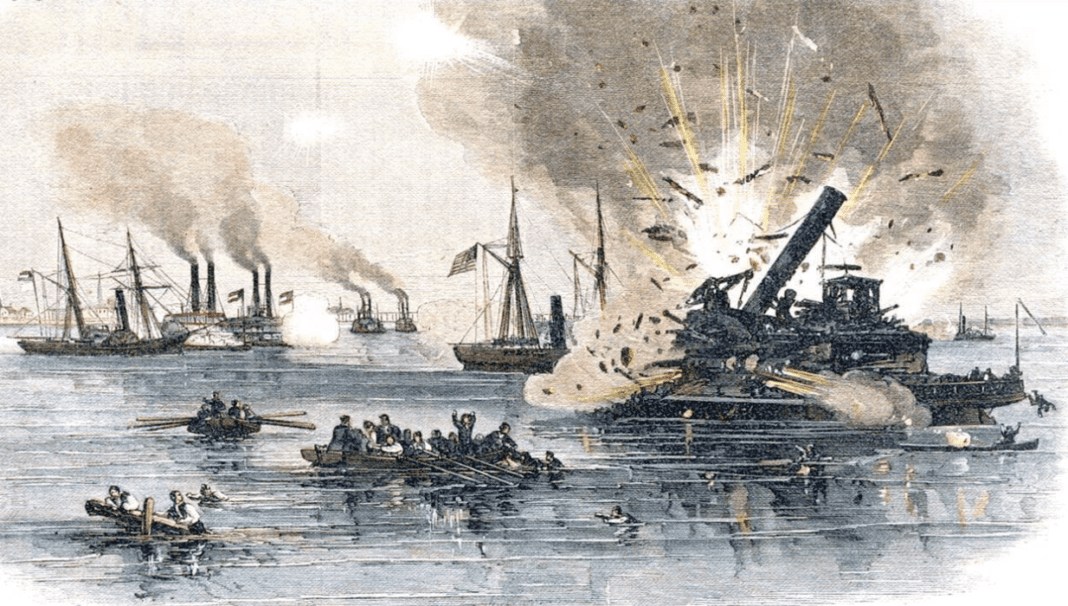
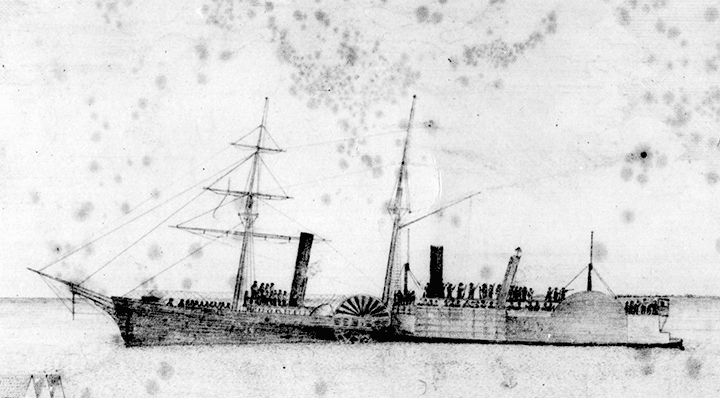
Meanwhile, two converted gunboats—the Neptune and the Bayou City—quietly entered the harbor from the rear. Taking advantage of surprise, they attacked the Union ship USS Harriet Lane. Although the Neptune was sunk during the exchange, the Bayou City managed to board the Union vessel and forced its surrender. The unexpected attack threw the Union fleet into disarray. Commander William Renshaw ordered a retreat, and the Union ships hastily abandoned Galveston.
Surrounded Union troops left on the wharf had no choice but to surrender. In a stunning victory, the Confederates captured nearly 400 Union soldiers, seized one ship, and sank another. Their losses totaled 27 dead and 117 wounded, along with the heroic sinking of the Neptune. Six Union ships fled the battle in disgrace.
Galveston remained under Confederate control until the end of the war. When the South finally fell, it was in Galveston—aboard the USS Fort Jackson—that General Edmund Kirby Smith signed the final Confederate surrender on June 2, 1865.
Houston’s Role in the Battle
Although Houston wasn’t the main battlefield of the Battle of Galveston, it played a crucial supporting role.
- Houston served as the Confederate headquarters for the Galveston counteroffensive.
- The city became a key logistics hub, gathering troops, weapons, and provisions for the upcoming battle.
- Two steamboats—the Bayou City and the Neptune—were converted into gunboats in Houston.
- The railroad between Houston and Galveston allowed for rapid troop deployment.